The Most Zero Waste Friendly Cities in the USA: 8 Places Doing the Real Work
San Francisco adopted a zero waste goal in 2002 and set 2020 as the finish line. In 2026, the city still sends trash to a landfill every workday, and so does every other city in the country.
So what does a zero waste city look like in the US today? It’s a place where the default options make it easier to avoid waste. Food scraps have a bin. Paint and old electronics have a drop-off yard. Plastic bags cost money or don’t exist at checkout. The eight cities below give residents those tools, and each publishes enough data to show where it falls short.
For every city, we cover what works, what the numbers say, and what it means for zero waste living if you live there or plan to visit.
TL’DR: Most Zero Waste Cities in the USA
| No US city has reached zero waste. The cities on this list have built the systems that make a zero waste lifestyle easier: curbside composting, drop-off yards for hard-to-recycle items, plastic packaging rules, and refill shopping. |
| San Francisco, Seattle, and Boulder have the longest track records. New York City and Portland, Oregon, made the biggest policy moves of the last two years. |
| Many published goals have already expired. Austin reported a 37.6% diversion rate against a 90% target, and Seattle’s 2024 garbage per person sat above its own 2030 target. |
| The national baseline is high. Americans generated 4.9 pounds of trash per person per day in 2018, and about half of all municipal waste went to landfill, according to the EPA. |
| Your habits still decide most of your household waste. A city can collect your food scraps. It can’t reuse the packaging for you. Zero waste is a collective responsibility! |
How We Chose These Zero Waste Cities
We judged each city on five criteria:
| Food scrap collection: Does the city pick up food waste curbside, and is participation required? |
| Hard-to-recycle access: Is there a public place to drop batteries, electronics, paint, textiles, and bulky plastics? |
| Packaging policy: Bag rules, foam bans, and laws that make producers pay for recycling. |
| Public, measurable goals: We gave weight to cities that publish results, including misses. |
| Refill and bulk shopping: Can residents buy groceries and household goods without new packaging? |
BBC Travel’s 2026 list of sustainable small towns focused mostly on renewable energy, so we pulled the one waste-specific example from it.
Zero Waste Cities at a Glance
| City | Food scrap collection | Standout program | Published goal | Latest public check-in |
|---|---|---|---|---|
| San Francisco, CA | Mandatory since 2009 | Edible food recovery rule (2022) | 50% less landfill disposal by 2030 | Dashboard target of 1,550 landfill tons per workday |
| Seattle, WA | Food scraps banned from garbage | 74% residential recycling capture | 2.13 lbs disposed per person per day by 2030 | 2.68 lbs in 2024 |
| Boulder, CO | Required through property managers | CHaRM hard-to-recycle center | Zero waste by 2025 | Goal date passed |
| New York City, NY | Mandatory citywide since October 2024 | Brown bin takes meat, bones, and dairy | Zero waste to landfill by 2030 | Fines narrowed in April 2025 |
| Portland, OR | Curbside food scraps | Producer-funded recycling since July 2025 | Statewide recycling overhaul | Law upheld in federal court, August 2026 |
| Austin, TX | Curbside compost for city customers | Universal Recycling Ordinance | 90% diversion by 2040 | 37.6% diversion |
| Minneapolis, MN | Opt-in curbside organics | Organics at 43% of eligible homes in year one | 80% recycling and composting by 2030 | Year-one tonnage half of projections |
| Fort Collins, CO | Curbside yard trimmings | Timberline hard-to-recycle yard | Zero waste by 2030 | Earlier 90% by 2025 target |
San Francisco, California
San Francisco set the template most US zero waste cities copied. The Board of Supervisors adopted a zero waste goal in 2002, and in 2009 the city made recycling and composting mandatory for every resident and business. Most households sort into three carts: blue for recycling, green for compost, and black for landfill, with collection run by Recology.
The policy record is long. According to the SF Environment zero waste timeline, the city banned polystyrene foam foodware in 2006, restricted plastic checkout bags in 2007, raised the bag charge to 25 cents in 2019, and started requiring food businesses to recover edible surplus food in 2022. The department reports 9.2 million pounds of food recovered through its programs.
San Francisco also changed how it keeps score. In 2018, it set two targets for 2030: cut waste generation by 15% and cut landfill and incineration disposal by 50%. The city’s public landfill data dashboard tracks progress against a target of 1,550 tons per average workday.
What it means for you: composting is a default here, not a hobby. Your effort shifts to the front end of zero waste practice, which means buying less packaging in the first place.
Seattle, Washington
Seattle has measured its waste for decades and publishes numbers that don’t always flatter it. In 2025, Seattle Public Utilities replaced its headline recycling rate with five new metrics, because lighter packaging and online shopping had made the old rate misleading.
The 2024 results, published in Seattle’s new waste metrics report, show both sides:
- Residents generated 5.21 pounds of waste per person per day, the lowest since 2000.
- Garbage disposed of came to 2.68 pounds per person per day. The 2030 target is 2.13.
- Households captured 74% of their recyclables, well above the 57% national figure the city cites.
- Food waste still made up 50,396 tons, or 19% of everything Seattle landfilled.
That last line shows where zero waste practice breaks down even in a city with strong rules: the kitchen. Seattle has banned food scraps from the garbage since 2015, and food remains the largest single problem in its landfill stream.
For refill shopping, Seattle has Mimi’s Zero Waste Market on 15th Ave NW, A Public Shop in West Seattle for refillable detergent and cleaners, and bulk aisles at PCC Community Markets co-ops. Small refill shops open and close often, so check hours before you go.
Boulder, Colorado
Boulder’s zero waste culture started with a nonprofit, not a city hall. Eco-Cycle built the first materials recycling facility in the Rocky Mountain region in 1979.
Boulder County followed with a publicly owned recycling center in 2001, paid for by a voter-approved sales tax, and Boulder voters later approved a trash tax to fund waste reduction work.
The EPA’s Boulder zero waste case study highlights the piece most cities still lack: the Center for Hard to Recycle Materials, known as CHaRM. Eco-Cycle runs it under a city contract, and it handles more than 2 million pounds of material a year, including electronics, small appliances, bikes, cooking oil, fire extinguishers, textiles, and yoga mats. Some items carry a fee.
Boulder’s Universal Zero Waste Ordinance requires property managers to give tenants trash, recycling, and compost service, and requires businesses to sort correctly.
The honest caveat: the city and county set a goal of zero waste by 2025. That date has passed, and we found no public report that the goal was met.
Boulder is also home to Nude Foods Market, a package-free grocery. Customers pay $1.50 for a reusable glass jar and get $1 back on return, according to Boulder Reporting Lab. The store opened its Boulder storefront in October 2021, added a Denver location in April 2024, and works with more than 100 vendors, about 45% of them local.
New York City, New York
New York’s waste story starts with Fresh Kills on Staten Island, once the largest landfill in the country. After its landfills and incinerators closed in the late 1980s, the city introduced mandatory recycling. Its OneNYC plan set a goal of sending zero waste to landfill by 2030, and organic material makes up 31% of the city’s waste stream.
The biggest recent move came in October 2024, when curbside composting became mandatory in every borough.
Fines started on April 1, 2025, as NY1 reported: $25 to $100 for buildings with one to eight units, and $100 to $300 for larger buildings. The brown bin takes fruit and vegetable scraps, meat, bones, dairy, cooked food, pizza boxes, greasy paper plates, and yard waste.
Seventeen days later, the city pulled back. After the Sanitation Department issued about 4,000 summonses, the administration limited fines to buildings with more than 30 apartments that had already received more than four warnings, according to reporting shared by the NYC Council. That policy ran through at least the end of 2025. Check the Department of Sanitation’s site for the current rules.
What it means for you: New York shows that a mandate and a habit are two different things. The brown bin is there. Using it is still mostly voluntary for small buildings.
Portland, Oregon
Oregon passed the first bottle deposit law in the country in 1971, and Portland has collected food scraps curbside since 2011. The newest change is bigger than either.
Oregon’s Plastic Pollution and Recycling Modernization Act, passed in 2021, took effect on July 1, 2025.
It makes the companies that sell packaging, paper, and food serviceware help pay for recycling, through fees managed by the Circular Action Alliance. Those fees fund facility upgrades, new carts and trucks, and education. Businesses under $5 million in annual revenue are mostly exempt.
According to the City of Portland’s guide to the new law, the accepted list barely changed. Plastic screw-on caps can now stay on bottles and jars, and clean pizza boxes go in the blue bin. Shredded paper is out and goes to RecycleOn drop-off centers instead, along with plastic bags, block foam, and hard plastic six-pack carriers.
A wholesaler trade group sued to block the law. In late August 2026, a federal judge upheld it, as OPB reported.
Why this matters beyond Oregon: when producers pay for what happens to their packaging, they have a direct reason to use less of it.
Austin, Texas
Austin adopted a goal in 2011 to divert 90% of its trash from landfills by 2040 and renewed that plan in November 2023. Curbside compost collection reached all city customers in 2021. Since 2018, the Universal Recycling Ordinance has required commercial properties to give tenants recycling and food businesses to divert organics.
The numbers show how hard the last stretch is. Smart Cities Dive reported Austin’s diversion rate at 37.6%, a figure it described as stalled. Private haulers handle 85% of the city’s trash, and on properties covered by the ordinance, 73.3% of collected material still went to landfill in 2021.
There is real progress at the household level. Waste per person per day fell from 5.6 pounds in 1995 to 4 pounds in 2022, even as the city’s population grew more than 20% in a decade.
What it means for you: Austin residents have the bins. The gap sits mostly with businesses and apartment buildings, which is where the city’s new plan points its next rules.
Minneapolis, Minnesota
Minneapolis adopted its Zero Waste Plan in December 2017, with targets of 50% recycling and composting by 2020 and 80% by 2030, according to the City of Minneapolis zero waste page.
Its organics program is a useful lesson. When curbside organics went citywide in 2016, 43% of eligible households signed up, beating the 40% target. But the first year’s tonnage, nearly 4,000 tons sent to a composting site in Rosemount instead of an incinerator, came in at about half of what consultants projected, as Waste360 reported.
Sign-ups aren’t the same as full bins. That gap shows up in nearly every opt-in program, and it’s the reason cities like New York moved to mandates.
Minneapolis also shows the limits of local power. The city passed a plastic bag ban in 2016, and the state preempted it in 2017. The city later adopted an amended Bring Your Own Bag ordinance, with enforcement resuming in October 2021.
Fort Collins, Colorado
Fort Collins hit a 50% diversion goal set in 1999 and later aimed for 90% by 2025. Its current target is zero waste by 2030.
What stands out is how the city makes the right choice the cheaper one. Curbside service runs under a city contract with Republic Services and uses pay-as-you-throw pricing across five trash cart sizes, so a smaller trash cart costs less. Recycling and seasonal yard trimmings collection come included.
The Timberline Recycling Center at 1903 S. Timberline Rd. has a free yard for everyday recyclables, including plastic bags and film. A separate hard-to-recycle yard, with a $5 entry fee for most items, takes electronics, batteries, paint, motor oil, cooking oil, bulky rigid plastics, concrete, wood, and yard trimmings.
The city crushes and resells some of that material, such as concrete and asphalt, for local construction.
A Small-Town Exception: San Luis Obispo, California
Zero waste living isn’t limited to big cities. BBC Travel’s 2026 list points to San Luis Obispo, where a city-run anaerobic digestion facility processes organic waste. Anaerobic digestion breaks down food scraps without oxygen and captures the resulting biogas, so the waste produces energy instead of landfill methane.
Swapping one plastic bag or container is a start. If you want a plan for the whole house, our guide on how to create a plastic-free home works room by room, beginning with a one-week trash audit so you know which plastic to cut first.
What a Zero Waste City Can’t Do for You
City programs handle the back end of waste management: collecting, sorting, and processing. The front end of sustainable living belongs to you.
The national picture explains why. The EPA’s national overview of materials, waste, and recycling reports that Americans generated 292.4 million tons of municipal solid waste in 2018, or 4.9 pounds per person per day. Only 32.1% was recycled or composted. About 146 million tons, half of the total, went to landfill. Food alone accounted for 21.6%. That 2018 data set is the most recent national figure the EPA has published, so treat it as a baseline, not a current snapshot.
Even Seattle, with some of the strictest rules in the country, still sends more than 2.6 pounds of garbage per person per day to landfill. Bins can’t fix what you bring home. A sustainable lifestyle that holds up in any city rests on a few habits:
- Buy secondhand first. Clothing, furniture, and kitchenware already exist. Use our guide to find a thrift store near you in the USA before buying new.
- Swap the single-use items you buy most. Our list of alternatives to plastic covers the kitchen, bathroom, and on-the-go swaps that cut the most packaging.
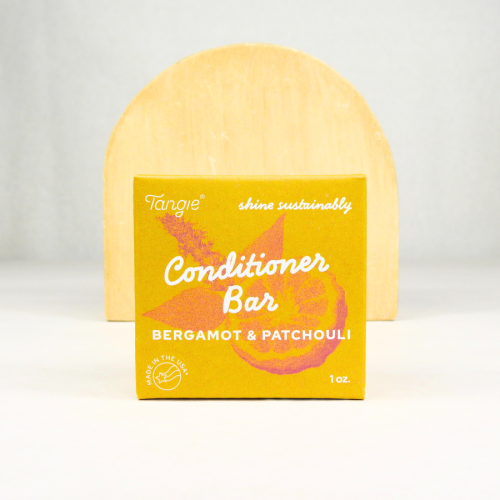
- Choose products that skip the bottle. A shampoo bar or laundry bar doesn’t leave a plastic bottle to rinse, sort, or hope your city accepts. That’s why Tangie Co makes shampoo bars, conditioner bars, a laundry bar, and dish soap concentrate, all vegan, Leaping Bunny certified, and sold in plastic-free packaging.
- Compost even without a curbside bin. A backyard pile, a worm bin, or a community garden drop-off handles most food scraps.
For more habits once the basics feel easy, read our zero waste tips for taking your sustainable lifestyle to the next level.
How to Find Zero Waste Stores in Any US City
Zero waste stores go by many names, which makes them hard to search for.
Try these steps:
- Search more than one term. Use “refillery,” “refill shop,” “bulk foods,” and “package-free grocery” along with your city name.
- Check food co-ops. Many, like PCC Community Markets in Seattle, sell grains, spices, oils, and cleaners from bulk bins.
- Call before your first visit. Ask whether the store accepts your own containers and how it weighs them. Some sell or rent jars, like Nude Foods Market’s deposit system.
- Use your city’s recycling guide for everything else. Fort Collins publishes a Recycling A to Z list, and most cities with hard-to-recycle centers have something similar.
One limit of this list: we named only stores with recent public reporting. Independent refill shops change hours, move, or close more often than chain stores, so confirm before you drive across town.
Frequently Asked Questions
Which US city is closest to zero waste?
No US city has verified zero waste. San Francisco and Seattle have the longest-running mandatory composting and recycling rules. Compare cities by pounds disposed per person, which is harder to inflate than a diversion rate.
Is composting mandatory anywhere in the US?
Yes. San Francisco has required it since 2009, and New York City made it mandatory citywide in October 2024, though fines for small buildings were paused in 2025. Seattle bans food scraps from the garbage.
Can I live a zero waste lifestyle in a city without these programs?
Mostly, yes. Refusing packaging, buying secondhand, choosing solid bars over bottled products, and composting at home work anywhere. City programs make the last stretch easier, not impossible.
The next time your city posts a waste report, skip the diversion rate and look for pounds disposed per person. That one number shows whether a zero waste city is shrinking its landfill or just sorting it better.
Sources You Can Read
- EPA: National Overview, Facts and Figures on Materials, Wastes and Recycling
- EPA: Zero Waste Case Study, Boulder
- SF Environment: Zero Waste
- City of San Francisco: Trash to Primary Landfill
- Seattle Public Utilities: A New Way to Measure Our Progress
- NY1: Composting fines set to begin
- NYC Council: Sanitation pauses fines for failing to compost
- City of Portland: Oregon’s Recycling Modernization Act
- OPB: Oregon Recycling Modernization Act clears legal hurdle
- Smart Cities Dive: Austin releases zero waste plan
- City of Minneapolis: Zero Waste
- Waste360: Minneapolis residents are recycling less organics than expected
- City of Fort Collins: Timberline Recycling Center
- BBC Travel: 10 of the US’s most sustainable small towns