
Does Hot Water Really Benefit Your Hair?

Warm water benefits your hair. Hot water mostly doesn’t. Water close to body temperature softens scalp oil and helps shampoo lather and rinse clean. Once the water gets hot enough to turn your skin pink, the trade flips: it strips more of the scalp’s own lipids than a wash needs, can make itching and flaking worse, and does nothing measurable for hair growth. Cold water sits at the other end. It’s fine as a last rinse, but it won’t add shine or wake up follicles.
That answer matters because most Americans shower with hot water. A 2024 Harris Poll of 2,073 U.S. adults found 52% prefer their shower “very warm” and 17% want it as hot as they can stand. Only 2% choose cold.
TL;DR – Does Hot Water Benefit Your Hair?
| Question | Short answer | Why |
|---|---|---|
| Does hot water really benefit your hair? | Warm water, yes. Hot water, no. | Warm water softens sebum, so shampoo works better. Hot water removes more scalp lipids than a wash needs. |
| Does hot water help hair growth? | No evidence it does | No published study links shower temperature to growth rate. Growth happens in follicles below the skin’s surface. |
| Is cold or hot water better for hair growth? | Neither | A shower lasts minutes and doesn’t change the follicle’s growth cycle. |
| Does hot water help dandruff? | It can make it feel worse | Dandruff is tied to Malassezia yeast and scalp oil. Heat loosens flakes for a day but can raise itch. |
| Is it bad to wash your hair with warm water? | No | Water close to 98°F (37°C) is the range most dermatology guidance points to. |
| What does cold water do to your hair? | Rinses and cools, little else | TRI Princeton testing found no shine gain from cold rinses. |
| Washing hair with cold or hot water: which is better? | Wash warm, finish however you like | Cleaning needs warmth. The final rinse is personal preference. |
| What should I change first? | Water heater at 120°F, shorter showers | The CPSC recommends 120°F to cut scald risk, and it lowers energy use too. |
Table of contents
- TL;DR – Does Hot Water Benefit Your Hair?
- Where Does Warm Water Help With Haircare & Showering?
- Does Hot Water Help With Hair Growth?
- Does hot water help or hurt dandruff?
- Is it bad to wash your hair with warm water?
- What cold water does to your hair?
- Six hair claims from Reddit, checked
- How hot water and hard water add up
- Hair Wash Routine – Temperature & What To Watch
- The setting that matters most is on your water heater
- What this article doesn’t cover
- Frequently asked questions
Where Does Warm Water Help With Haircare & Showering?
Shampoo does the cleaning. Water’s job is to soften what the shampoo needs to lift, then carry it away.
Scalp oil, or sebum, is a blend of triglycerides, wax esters, squalene, and free fatty acids. It doesn’t melt at a single point. Researchers P. Bord and N. Goetz, publishing in the Journal of the Society of Cosmetic Chemists in 1977, measured human sebum with differential scanning calorimetry.
They found it melts across a very wide band, from solid far below freezing to fully liquid at 122°F (50°C). At scalp temperature, it’s already soft. Warm water softens it a little more, which is why shampoo spreads and lathers faster in a warm shower than a cold one.
Nothing in that process needs scalding water. Your shampoo’s surfactants surround oil and lift it away at body temperature. Push the water hotter and you mostly speed up the part you don’t want: pulling out the lipids that hold the outer layer of scalp skin together. The American Academy of Dermatology gives the same advice for dry skin anywhere on the body. Warm water, not hot.
The hair fiber has its own reaction to water. Undamaged hair absorbs roughly a third of its own weight in water and swells as it does. Wet hair stretches further and breaks under less force than dry hair, because water disrupts the hydrogen bonds that help hold keratin chains in place.
A 2011 study in the Annals of Dermatology by Yoonhee Lee and colleagues tested hair dried at different heat settings and hair left to dry on its own. The air-dried hair showed damage to the cell membrane complex, the layer that binds cuticle cells together.
The authors linked it to long contact with water. The practical point for showering: how long hair stays wet matters more for the fiber than the exact water temperature. The average U.S. shower in the Harris Poll ran 16.1 minutes. Trimming that does more for your lengths than switching the dial to cold.
If you want the side-by-side breakdown of temperature ranges, color fade, and breakage versus hair loss, our guide to hot water vs cold water for hair covers it. This article checks the specific benefits people expect from hot water, and whether the evidence backs them.
Does Hot Water Help With Hair Growth?
The theory goes like this. Heat widens blood vessels, more blood reaches the scalp, follicles get more nutrients, and hair grows faster. Each step sounds plausible. The chain breaks at the last link.
Hair grows from follicles that sit a few millimeters below the skin’s surface, in cycles set mostly by genetics, hormones, and age. A hot shower warms the surface for 10 to 20 minutes, then the scalp cools again. No published study has shown that shower water temperature changes how fast hair grows or how long the growth phase (anagen) lasts. For a claim repeated this often, that gap says a lot.
The research people tend to cite is about touch, not heat. A 2016 study in Eplasty by Taro Koyama and colleagues had nine healthy Japanese men receive four minutes of standardized scalp massage from a device every day. After 24 weeks, average hair-shaft thickness rose from 0.085 mm to 0.092 mm.
Two details limit what that study can tell you. It tested mechanical stretching of the scalp, not temperature. And nine people with no control group is a starting point for more research, not proof. When it gets cited as evidence that hot water grows hair, it’s being stretched well past what it measured.
Cold water gets the same claim in reverse. The idea that cold showers “shock” follicles into growth has no study behind it. Cold water briefly narrows surface blood vessels, the opposite of the circulation story, and nobody has shown that either change reaches the follicle in a way that matters.
So, is cold or hot water better for hair growth? Neither. What does affect how much length you keep is breakage. Dry, fragile ends snap during detangling and towel drying, and that looks like slow growth. Warm water, a gentle shampoo, conditioner on the lengths, and blotting instead of rubbing with a towel protect length better than any temperature trick.
If you’re shedding more than usual, losing hair in patches, or seeing your part widen, book a visit with a board-certified dermatologist. Water temperature isn’t the cause, and changing it won’t change the outcome.
Does hot water help or hurt dandruff?
Dandruff is the mild end of seborrheic dermatitis. UCLA Health describes it as an inflammatory scalp condition often linked to overgrowth of Malassezia, a yeast that feeds on sebum. Dry or cold weather, styling product buildup, hormonal shifts, and the warm, humid space under a hat or wig can all set it off.
Hot water appeals to people with flakes because it seems to work. A long, hot rinse lifts loose scale, and the scalp looks clean for a day. Then the flakes come back, often with more itch.
Heat doesn’t touch the yeast. It does dry out the outer scalp layer, and dry, irritated skin itches. Scratching lifts more scale. The cycle repeats.
The American Academy of Dermatology’s dandruff guidance doesn’t mention water temperature at all. It focuses on active ingredients: zinc pyrithione, salicylic acid, sulfur, selenium sulfide, ketoconazole, and coal tar. The AAD advises leaving some of these shampoos on the scalp for 5 to 10 minutes before rinsing. For fine or straight hair and oily scalps, it suggests you may need to shampoo daily and use the dandruff shampoo twice a week.
For coarse, curly, or coily hair, it suggests about once a week, applied to the scalp only, because these ingredients can dry out the lengths. The full guidance is on the American Academy of Dermatology’s dandruff page.
That 5 to 10 minute wait is where warm water earns its place. You’re standing in the shower anyway. Keeping the water warm instead of hot makes the wait comfortable without adding dryness on top of the flaking.
Is it bad to wash your hair with warm water?
No. Warm water is what most hair and skin guidance recommends. The confusion comes from articles that lump “warm” and “hot” into one category.
A workable test: water close to body temperature, about 98°F (37°C), feels neutral to slightly warm on the inside of your wrist. It shouldn’t turn your scalp, neck, or shoulders pink. If you step out with red skin, the water was hot, not warm.
Warm water handles three jobs well:
- It softens sebum and styling residue so shampoo can lift them.
- It helps solid shampoo and conditioner bars soften and lather. A bar rubbed under cold water takes longer to foam, which tempts people to use more product than they need.
- It rinses product out fully. Conditioner left behind weighs down fine hair and adds to buildup at the roots.
People with color-treated hair should stay at the cooler end of warm. Hotter water speeds up dye loss, so lukewarm washes and fewer washes per week help color last longer.
What cold water does to your hair?
Cold water rinses. It feels bracing. Beyond that, the evidence for its benefits is thin.
Shine. Chemists at TRI Princeton, an independent nonprofit hair research lab in New Jersey, compared hair rinsed in water of at least 98°F with hair rinsed below 65°F. Cold rinsing added no shine. Their view was that warm water may do better, since it removes more of the residue that dulls the hair’s surface.
Sealing the cuticle. This is the most repeated cold-water claim, and it gets the mechanism wrong. Cuticle scales lie flatter when the hair surface is slightly acidic, which is why conditioners and acidic rinses are usually formulated around pH 4.5 to 5.5. Temperature has far less effect on cuticle position than pH and conditioning agents do. A cold rinse won’t undo what a high-pH cleanser lifted.
Cleaning. Cold water is weak at it. Sebum firms up as it cools, shampoo spreads less easily, and residue is more likely to stay behind. Washing in cold water usually means using more shampoo for the same result.
Comfort. A cool final rinse wakes some people up or gets them out of the shower faster. Good reasons, but not hair benefits.
So, washing hair with cold water or hot: which one is better? Wash warm. Finish however you like.
Six hair claims from Reddit, checked
Hair communities on Reddit, such as r/HaircareScience and r/curlyhair, trade a lot of water-temperature advice. Some of it is sound. Some of it repeats a claim that sounds right and isn’t. Six of the most common:
| Claim | Verdict | What’s going on |
|---|---|---|
| “Hot water makes my scalp greasier by the next day.” | Partly true, wrong reason | Hot water doesn’t raise oil output. Hormones and genetics control that. It can leave the scalp dry and irritated, and hair can look flat and oily sooner. |
| “A cold rinse makes my hair shiny.” | False | TRI Princeton testing found no shine gain from cold rinses. |
| “Steam opens scalp pores so shampoo cleans deeper.” | False | Follicle openings have no muscles to open or close. Shampoo cleans the surface of the scalp and hair. |
| “I lose more hair in hot showers.” | Mostly false | Washing releases hairs already in the shedding phase. The AAD puts normal shedding at 50 to 100 hairs a day, so wash days just collect what was already loose. Heat can raise breakage, which is a different problem. |
| “Cold showers grow hair faster.” | No evidence | No study links shower temperature to growth rate. |
| “Hot water clears dandruff.” | False | It lifts loose flakes for a day. It doesn’t address Malassezia and can make the itch worse. |
How hot water and hard water add up
Large parts of the U.S., including much of the Southwest, the Great Plains, and the Midwest, have hard tap water. The U.S. Geological Survey defines hard water by its calcium and magnesium content. Those minerals react with soap to form soap scum, which makes lather harder to build and takes more water to rinse away. On hair, that residue shows up as dullness, stiffness, and a coated feel that more shampoo doesn’t fix.
Heat changes how minerals behave, though not in the way people assume. Calcium carbonate dissolves less in hot water than in cold, which is why scale builds up inside kettles and water heaters. Whether shower temperature changes how much mineral residue sticks to hair hasn’t been studied well. The bigger factors are how hard your water is, whether your cleanser is a true soap (which reacts with calcium and magnesium) or a synthetic surfactant, and how thoroughly you rinse.
If you live in a hard-water area and your hair feels coated no matter how you wash, read is hard water bad for your hair before you blame the temperature. A shower filter, an occasional clarifying or chelating wash, and an acidic rinse do more than any change to the dial.
Hair Wash Routine – Temperature & What To Watch
Temperature is one setting. How often you wash, what you wash with, and where the product goes matter just as much. Start here and adjust.
| Hair and scalp type | Wash temperature | Final rinse | What to watch |
|---|---|---|---|
| Oily scalp, fine or straight hair | Warm | Lukewarm or cool, your choice | Shampoo the scalp, not the lengths. Condition mid-lengths to ends only. |
| Dry scalp, coarse, curly, or coily hair | Warm, on the cooler side | Lukewarm | Longer gaps between shampoos. Conditioner-only washes in between can help. |
| Color-treated hair | Lukewarm | Cool | Fewer washes per week. Hot water speeds fade. |
| Flaky or dandruff-prone scalp | Warm, not hot | Lukewarm | Give medicated shampoo its full contact time per the label. |
| Hard-water area | Warm | Lukewarm | Periodic clarifying or chelating wash. Add a filter if residue persists. |
If oil at the roots is the main complaint, why is my hair so greasy walks through the causes, from product buildup to harsh sulfates, and what to change first. For curly and coily hair that dries out between shampoos, co-washing your hair explains how to use conditioner as a gentle cleanser between shampoo days, and where it falls short.
If you use solid bars, the routine is the same with a few small changes:
- Wet your hair fully with warm water before the bar touches it.
- Glide the bar over your scalp three or four times, or build lather between your palms first.
- Massage with your fingertips, not your nails.
- Rinse until the water runs clear and your roots don’t feel slick.
- Store the bar on a draining dish out of the shower stream so it dries between uses.
The setting that matters most is on your water heater
Most of this article covers choices you make at the tap. One of the most useful changes happens before the water reaches it.
The U.S. Consumer Product Safety Commission recommends setting home water heaters to 120°F. Its tap water scald safety alert explains why: a six-second exposure to 140°F water can burn skin, while at 120°F it takes about five minutes of exposure to cause a third-degree burn. Young children and older adults face the highest risk.
A lower setting also caps how hot your shower can get. For the 17% of Americans in the Harris Poll who shower as hot as they can stand, that takes the hottest option off the table without anyone having to think about it.
There’s an energy side too. The U.S. Department of Energy estimates that water heating accounts for about 18% of home energy use. Turning down the heater and trimming a 16-minute shower by a few minutes cuts energy and water use, with no downside for your hair. In a low-waste bathroom, that change sits next to swapping plastic bottles for bars: small, repeatable, and visible on your utility bill.
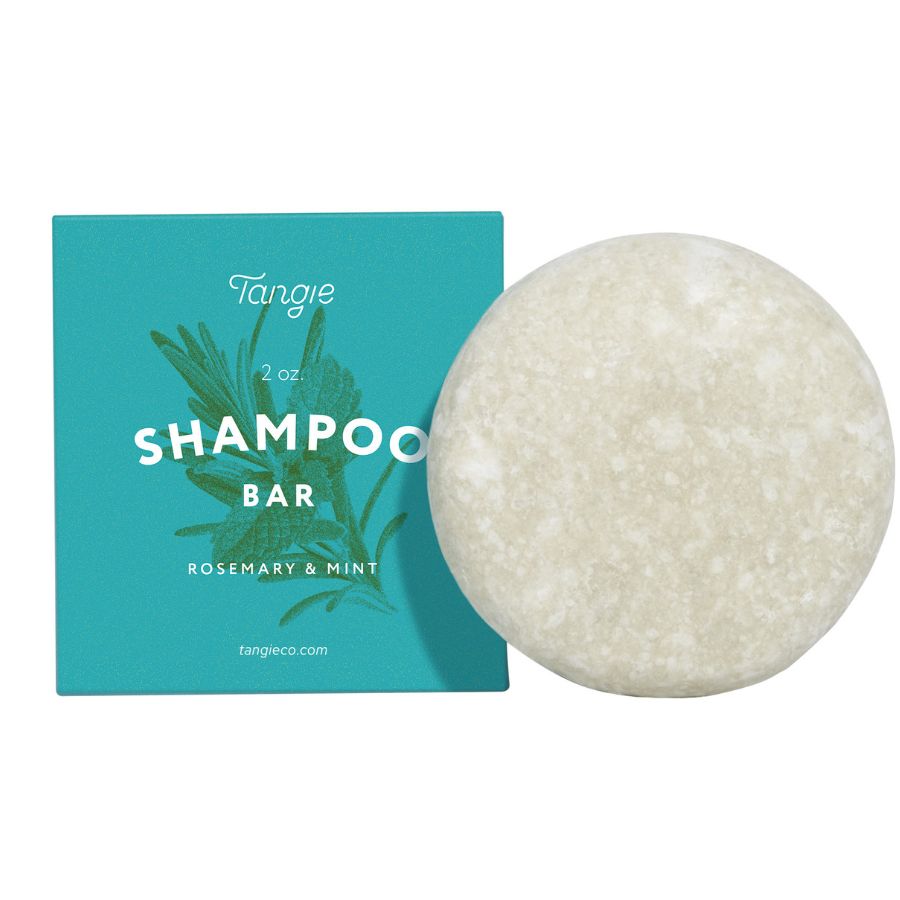
Tangie Co shampoo and conditioner bars are plastic-free, vegan, and Leaping Bunny certified, and they lather in warm water at the temperatures above. You don’t need a hot shower to get a full wash.
What this article doesn’t cover
Water temperature is a small part of hair and scalp care. This article doesn’t address:
- Medical hair loss. Androgenetic alopecia (pattern hair loss), alopecia areata, telogen effluvium after illness or stress, and thyroid-related shedding need a diagnosis from a board-certified dermatologist.
- Scalp conditions beyond mild dandruff. Scalp psoriasis and moderate to severe seborrheic dermatitis may need prescription care.
- Heat styling. Flat irons and blow dryers expose hair to far higher temperatures than any shower and deserve their own look.
- Pool and ocean water. Chlorine and salt affect hair through chemistry, not temperature.
If your scalp burns, bleeds, or itches enough to wake you at night, or you’re losing hair in clumps, see a dermatologist instead of adjusting the shower dial.
Great Sources To Read In Your Free Time
| Source | Link |
|---|---|
| American Academy of Dermatology, “How to treat dandruff” | https://aad.org/hair-scalp-care/treat-dandruff |
| U.S. CPSC, “Tap Water Scalds” safety alert | https://www.cpsc.gov/s3fs-public/5098-Tap-Water-Scalds.pdf |
| The Harris Poll, U.S. shower habits survey (2024) | https://theharrispoll.com/briefs/shower-habits/ |
| Bord & Goetz (1977), human sebum | https://library.scconline.org/v028n06/3 |
Frequently asked questions
Warm, close to body temperature, about 98°F (37°C). It should feel neutral to slightly warm on your wrist and shouldn’t redden your skin.
Not the kind that starts at the root. Hot water can dry hair and raise breakage, which can look like thinning at the ends. Shedding from the root has other causes.
You can if you like how it feels. TRI Princeton’s testing found no shine benefit. Rinse until your hair no longer feels coated, at whatever temperature is comfortable.
Hair swells in water whether it’s warm or cool. Cuticle position responds more to pH than to temperature, which is why conditioners are formulated slightly acidic.


