
How to Create a Plastic-Free Kitchen: What to Replace First and What Can Wait

A kitchen holds more plastic than any other room in most American homes, and much of it never gets noticed: the spatula that’s been melting a little at the edge for three years, the cutting board with knife grooves deep enough to hold water, the takeout containers that turned orange after one round of spaghetti sauce. A plastic-free kitchen doesn’t mean throwing all of that into a bag tomorrow. It means knowing which pieces to replace first.
The order matters more than the shopping list. Heat, friction, and fat are the three conditions under which plastic breaks down fastest and sheds the most particles into food. Plastic that holds dry rice in a cool cupboard is a low priority. A scratched nonstick skillet you use every morning is a high one.
TL’DR – How To Create A Plastic-Free Kitchen
| Short answer | |
|---|---|
| What should I replace first? | Plastic that touches hot food, gets scraped by knives or spatulas, or holds oily and acidic food. Dry pantry storage can wait years. |
| Which items are top priority? | Scratched nonstick pans, plastic cutting boards, plastic cooking utensils, and any container you microwave or fill with hot leftovers. |
| What cookware has no plastic coating? | Cast iron, carbon steel, stainless steel, and enameled cast iron. All of them can last decades. |
| What creates steady waste at the sink? | Dish soap bottles, plastic sponges, and spray cleaners. A dish soap concentrate, a wooden brush, and cotton cloths cover most of it. |
| What can wait? | The pantry and fridge. Reuse jars you already own before buying matching glass sets. |
| Can a kitchen be 100% plastic-free? | No. Some packaging, appliance parts, and seals will stay plastic. Aim for less plastic touching your food and less going in the trash. |
The plan below works through the kitchen in that order. If you’re tackling the rest of the house too, our room-by-room guide on how to create a plastic-free home covers the bathroom, laundry room, and a one-week trash audit to find your biggest plastic sources.
The Rule That Sets Your Order: Heat, Scrape, Fat
Before buying anything, walk through your kitchen and sort every plastic item into three groups.
- Replace soon: Plastic that touches food while hot, gets cut or scraped, or holds oily or acidic food. Nonstick pans, cutting boards, cooking spoons and spatulas, colanders used for boiling pasta, microwave containers, plastic kettles, and coffee makers that pour boiling water through plastic.
- Replace when worn: Plastic that touches food cold or at room temperature. Food storage tubs used only in the fridge, plastic mixing bowls used for salads, measuring cups.
- Keep until it breaks: Plastic that rarely touches food. Drawer organizers, the outside of appliances, a plastic step stool, a dish rack.
This sorting saves money and keeps usable items out of the landfill. It also matches the research below. The microwave, nonstick, cutting board, and tea bag studies all point to the same triggers: heat, friction, and wear.
Cookware: Where Your Biggest Upgrade Happens
Nonstick pans
Most nonstick pans sold in the US use a coating of PTFE, a fluoropolymer plastic sold most famously under the brand name Teflon. When the coating is intact and used at moderate heat, it’s stable. When it’s scratched, it sheds.
In 2022, researchers from the University of Newcastle and Flinders University in Australia used Raman imaging to look at what comes off damaged nonstick surfaces. They estimated that a single surface crack can release about 9,100 plastic particles, and a broken coating can release around 2.3 million micro- and nanoplastics. Their study appeared in Science of the Total Environment.
If your nonstick pans show scratches, flaking, or bare metal, they belong at the top of your replacement list. Metal utensils, steel wool, and high heat speed up that damage.
What to replace them with
| Material | Good for | Care notes | Plastic-free? |
|---|---|---|---|
| Cast iron | Searing, frying, baking, cornbread | Hand-wash, dry on the stove, rub with a thin layer of oil | Yes |
| Carbon steel | Eggs, stir-fry, crepes once seasoned | Same care as cast iron; lighter and heats faster | Yes |
| Stainless steel | Sauces, boiling, browning, acidic food | Dishwasher-safe; use a little more oil and let the pan preheat | Yes |
| Enameled cast iron | Braises, soups, tomato sauces, bread | No seasoning needed; avoid metal scouring pads | Yes (glass enamel, not plastic) |
| Ceramic-coated nonstick | Eggs and delicate fish | Coating wears down faster than PTFE; replace when food starts sticking | No PTFE, but a sol-gel coating that still wears off |
Cast iron and carbon steel take a few weeks to learn. Eggs stick at first. A well-seasoned pan gets slicker every time you cook in it, and a cast iron skillet bought today can outlast you. That’s the opposite of a nonstick pan, which typically needs replacing every few years.
You don’t need a full set. One 10- or 12-inch cast iron skillet and one stainless steel pot handle most weeknight cooking.
Utensils
Plastic spatulas, spoons, and ladles sit in hot oil and simmering sauce, which puts them firmly in the “replace soon” group. Wood, bamboo, and stainless steel are the plastic-free options. Use wood on enameled cast iron and stainless on uncoated pans.
You may have seen headlines in late 2024 warning that black plastic utensils contain flame retardants from recycled electronics. That study, published in Chemosphere and widely shared on social media, contained a math error. The authors corrected it in December 2024. The original paper made estimated exposure look close to the EPA’s reference dose.
The corrected math puts it at under a tenth of that limit. The underlying finding, that some black plastic kitchenware contains recycled e-waste plastic, still stands. It’s a fair reason to choose wood or steel, but not a reason to panic.
Silicone: a middle ground
Silicone spatulas, baking mats, and lids are popular plastic-free swaps, and they’re heat-tolerant and long-lasting. Be clear about what silicone is, though: a synthetic polymer made from silicon and oxygen, not a natural material.
It doesn’t biodegrade, and few US curbside programs recycle it. It’s a reasonable choice for an item you’ll use for a decade, such as a baking mat that replaces years of parchment paper. It’s a poor choice if the goal is a kitchen with no synthetic materials at all.
Cutting Boards: The Overlooked Plastic Source
Every time a knife hits a plastic cutting board, it cuts a tiny groove. Some of that plastic ends up in your food.
A 2023 study in Environmental Science & Technology, summarized by the American Chemical Society, had volunteers chop carrots and other foods on polyethylene, polypropylene, and wooden boards.
The researchers estimated that a person using plastic boards could take in tens of millions of microplastic particles a year from chopping alone. Polypropylene boards produced more particles than polyethylene. In a 72-hour lab test, the released particles weren’t toxic to mouse cells, a reminder that “found in food” and “proven harmful” are separate questions.
Wood is the most common replacement. Maple, walnut, and cherry are hard enough to hold up and gentle on knife edges. Some practical notes:
- Food safety: Both wood and plastic boards are safe when cleaned properly. Keep a separate board for raw meat, wash with hot soapy water after each use, and dry it standing on edge.
- Never soak wood or run it through the dishwasher. It will crack and warp.
- Oil it monthly with food-grade mineral oil or a board conditioner.
- Bamboo boards are a common “eco” option, but many are made of strips bonded with glue, sometimes a melamine-formaldehyde resin. A solid wood board avoids that question.
Storage: Heat Is the Line
Containers you heat
Our plastic-free home guide covers the University of Nebraska–Lincoln study that found microwaving plastic containers releases millions of particles per square centimeter within minutes. The kitchen takeaway is simple: anything that goes into the microwave or holds hot leftovers should be glass, ceramic, or stainless steel. Pyrex-style tempered glass containers with lids are widely available at Target, Walmart, and grocery stores.
Many glass containers come with plastic snap lids. That’s acceptable, since the lid doesn’t need to touch food or go in the microwave. Lift it off before reheating and cover the dish with a plate instead.
The dishwasher counts as heat too. If you’re keeping plastic containers for cold storage, wash them by hand or on the top rack, away from the heating element.
The fridge and freezer
Cold storage is where plastic can stay longest. When those tubs crack, replace them with:
- Mason jars for soups, sauces, stock, and grains. For freezing, use straight-sided wide-mouth jars and leave at least an inch of headspace so expanding liquid doesn’t crack the glass.
- Stainless steel containers for leftovers and lunches. They don’t break when dropped.
- Plant-wax wraps for cheese, half an avocado, or covering a bowl. They don’t work for raw meat, since they can’t be washed in hot water.
- A plate on a bowl. Free, and it works.
For the freezer, glass and steel need more planning than plastic bags. Freeze food flat in shallow containers or portion it into jars. Skip glass for anything you’ll need to thaw fast.
The pantry
Pantry plastic is the lowest priority because dry, cool storage puts very little stress on it. Don’t buy a matching set of glass canisters for looks. Wash and reuse the glass jars from pasta sauce, pickles, and salsa. Peel labels by soaking the jar in hot water with a spoonful of baking soda.
If a store near you sells bulk dry goods, reusable cotton bags and jars let you skip the packaging entirely. Weigh the jar empty at customer service (the tare weight) before filling it.
The Sink Station
The sink area produces plastic trash on a schedule: a new dish soap bottle every few weeks, a new sponge every week or two, a new spray cleaner every month.
Dish soap
The bottle is the waste. Liquid dish soap is mostly water, which is why it needs a sturdy plastic container. Two plastic-free options:
- Solid dish block: Wet a brush, rub it on the block, and scrub. Works well for pots and pans.
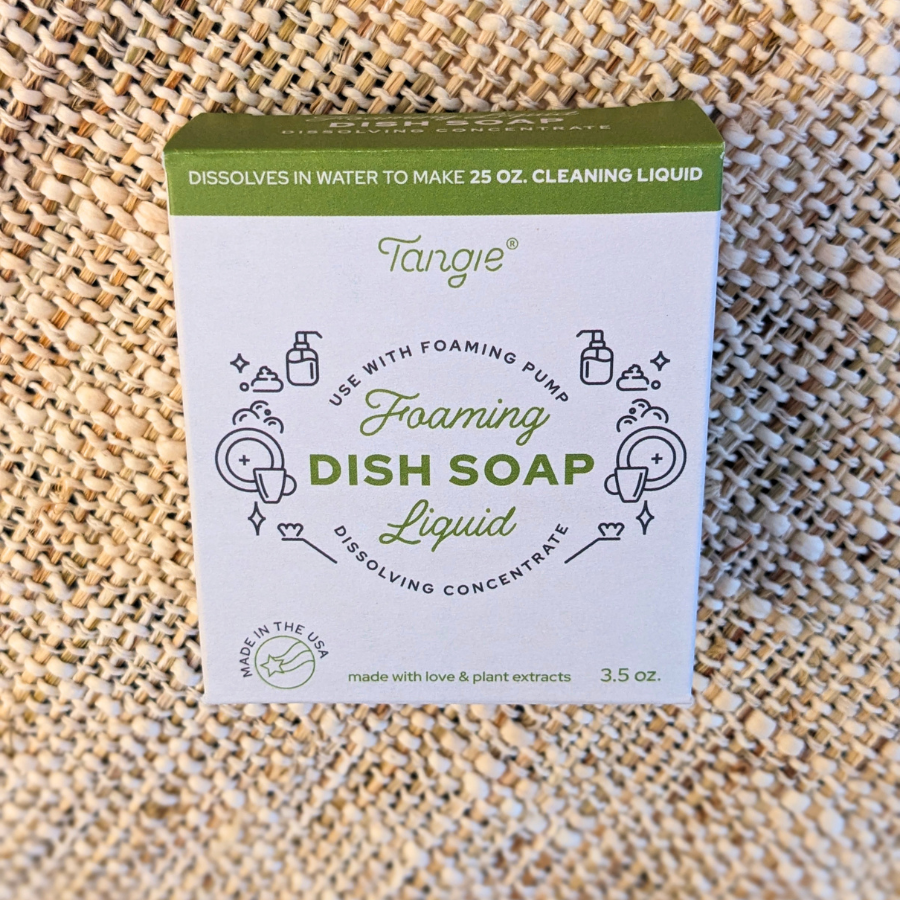
- Dish soap concentrate: Sold in plastic-free packaging and mixed with water in a glass pump or bottle you keep for years. It behaves like the liquid soap you’re used to.
Sponges and scrubbers
Most conventional kitchen sponges are made of polyurethane foam or polyester and break into small fragments as they wear. Swap them for:
- A wooden dish brush with a replaceable head (plant fibers such as tampico or sisal).
- Natural cellulose sponges without a plastic scrub layer, made from wood pulp, which can be composted when worn out.
- Cotton or linen dishcloths, washed with your towels.
- A stainless steel chain mail scrubber for cast iron.
Hand soap and counter spray
A kitchen hand soap refill or a hand and body wash concentrate in a glass pump removes another recurring bottle. For counters, mix a cleaning concentrate into a glass spray bottle, or use diluted white vinegar on non-stone surfaces. Vinegar etches marble and granite, so use a pH-neutral cleaner on stone.
You can find dish soap concentrate, hand and body wash concentrate, and home care products in plastic-free packaging in the Tangieco shop.
Trash bags
This is one place where a perfect swap doesn’t exist yet. Options in order of plastic reduction:
- Line the bin with newspaper or a paper grocery bag and wash the bin weekly.
- Compost food scraps so the trash stays dry and doesn’t need a sealed liner.
- Use a bag made from recycled plastic.
Be careful with “compostable” trash bags. Most need industrial composting, and anything sent to a landfill won’t break down as advertised.
Small Appliances and Drinks
Don’t replace a working appliance just because it has plastic parts. Making a new blender uses far more material than the plastic in your old one. When something breaks, look for:
- Kettles: stainless steel or glass interior, so boiling water doesn’t sit against plastic.
- Coffee: a French press, stainless pour-over cone, or moka pot instead of a plastic pod machine. Pods add up to hundreds of plastic cups a year for a daily drinker.
- Blenders and food processors: glass jars instead of plastic pitchers where available.
Tea is worth a look too. In 2019, researchers at McGill University in Montreal steeped “silky” plastic mesh tea bags at brewing temperature and estimated that a single bag released around 11.6 billion microplastic and 3.1 billion nanoplastic particles into the cup. Many paper tea bags also contain polypropylene to seal the edges. Loose-leaf tea in a stainless steel infuser avoids both.
Shopping: Stop Plastic Before It Comes Home
The cookware swaps are one-time decisions. These shopping habits come straight from the first of the 3Rs: reduce. If you’re new to zero waste living, our beginner’s guide to the 3Rs of zero waste explains how reduce, reuse, and recycle work together, and why steady progress counts for more than a perfect trash jar.
The packaging decisions happen every week, and they’re where most kitchen trash comes from.
- Plan meals before shopping. Food you throw away usually comes wrapped in plastic. Buying less produces less packaging waste and less food waste.
- Pick loose produce over bagged or clamshell packs when prices are close.
- Choose glass, metal, and paper over plastic for the same product: oats in a cardboard canister, olive oil in glass or tin, tomatoes in cans or glass jars.
- Use the deli and butcher counters with your own containers where allowed. Policies vary by store and state health code, so ask first.
- Buy larger sizes of what you use often. One big container beats four small ones.
Mistakes That Make a Kitchen Less Sustainable
Throwing out good plastic to buy glass. A plastic tub that keeps working for another five years has a smaller footprint than a new glass set made and shipped today. Replace on wear, not on sight.
Buying “eco” versions of everything. Bamboo-fiber dinnerware is a good example. Much of it is bamboo powder bound with melamine resin, a plastic. The label says bamboo. The material is mostly plastic.
Treating every “plastic-free” claim as equal. A product can come in a plastic-free box and still contain plastic, or come in a plastic bottle and contain none. Read both the packaging and the materials list.
Expecting zero. Your refrigerator door seal, your dishwasher racks, and the lining of most canned food will stay plastic. That’s fine. Focus on what you can control: what touches your food and what you throw out every week.
Your Kitchen Swap Plan by Month
| Month | Swap | Cost range |
|---|---|---|
| Month 1 | Replace scratched nonstick pans and plastic cooking utensils | Cast iron skillets start around $20 to $40 |
| Month 2 | Replace plastic cutting boards with solid wood | About $25 to $60 |
| Month 3 | Move microwave and hot-food storage to glass | About $25 to $40 for a set |
| Month 4 | Switch dish soap, sponges, and counter spray at the sink | Varies; reusable brush and cloths are low cost |
| Ongoing | Shopping changes, jar reuse, cold storage as tubs wear out | Often saves money |
Prices are approximate US retail ranges as of 2026 and vary by brand and store.
Where Tangieco Fits
Tangie Co began in 2012 with a laundry soap, started by a founder who couldn’t find an ingredient list on her detergent. That focus on what’s in a product, and what it’s packaged in, carries into our kitchen and home care. Our products ship in paper and aluminum packaging, are vegan, and are Leaping Bunny certified.
For more swaps beyond cookware and the sink, including bags, freezer storage, and new materials like mycelium packaging, see our guide to alternatives to plastic. If you’re ready to take kitchen habits further, with composting, greywater reuse, and finding local refill programs, read our zero waste tips for taking your sustainable lifestyle to the next level.
Start With One Drawer
Open your utensil drawer tonight. Pull out anything plastic that’s melted, chipped, or warped. That pile is your first replacement list, and it’s probably shorter than you expected. Everything else stays in service until it wears out, and your kitchen gets a little less plastic every month without a single wasteful purge.

 How to Create a Plastic-Free Home: A Room-by-Room Plan for Real Life


