BTMS vs Behentrimonium Chloride Explained

BTMS (behentrimonium methosulfate) and behentrimonium chloride (BTAC) are close cousins. Both are positively charged (cationic) conditioners with the same 22-carbon tail from rapeseed oil. They differ in the small ion paired with that tail, the raw form formulators buy, and how strictly Europe limits them. In a finished conditioner, both detangle and calm static.
Neither one is toxic at the levels used in hair care. Plenty of pages online call the chloride version toxic. The regulatory record says otherwise, and the details are below.
TL;DR
| Question | Answer |
|---|---|
| What is BTMS? | A plant-derived cationic conditioner and emulsifier, usually sold pre-blended with fatty alcohols. |
| What is behentrimonium chloride? | The same conditioning molecule paired with a chloride ion instead of methyl sulfate. |
| What’s the main difference? | The counter-ion, the raw form, and EU rules. Europe caps BTAC. It has no matching cap for BTMS. |
| Which one is stronger? | BTAC is often sold at higher active levels. BTMS is the easier, gentler pick for bars and creams. |
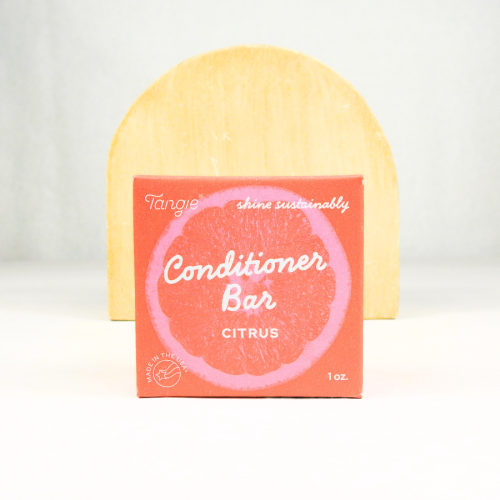
| What do Tangie Conditioner Bars use? | BTMS, blended with cetearyl alcohol, in every conditioner bar. |
Table of contents
- What Is The Difference Between BTMS And Behentrimonium Chloride?
- What is BTMS?
- What is behentrimonium chloride?
- Benefits of Behentrimonium Chloride For Hair
- Is Behentrimonium Chloride Safe?
- BTMS 50 vs BTMS 25
- Is BTMS-25 Natural?
- Behentrimonium chloride alternatives
- Which one should you choose?
- Why Tangieco uses BTMS, not behentrimonium chloride
- How to spot each one on a label
- Quick answers
- Sources
What Is The Difference Between BTMS And Behentrimonium Chloride?
Same conditioning backbone, different partner ion. That one swap changes how the raw material is sold and how regulators treat it.
- Counter-ion. BTMS pairs the conditioning molecule with methyl sulfate (methosulfate). BTAC pairs it with chloride. Neither partner does any conditioning. It just balances the charge.
- Raw form. BTMS usually comes as a ready-made blend with cetearyl or cetyl alcohol. BTAC is often sold at high strength, and some grades come dissolved in isopropyl alcohol.
- Regulation. The EU caps BTAC by product type. The US sets no cap on either one.
- Feel. Both soften and detangle. BTMS is the classic pick for a creamy, powdery finish. BTAC is the classic pick for thick, coarse or hard-to-manage hair.
- Structure. Neither is an esterquat. Some summaries online call BTMS one. Esterquats have an ester link in their chain. BTMS and BTAC don’t, which is why safety reviewers group them with the “trimoniums.”
| BTMS | Behentrimonium chloride (BTAC) | |
|---|---|---|
| INCI name | Behentrimonium Methosulfate | Behentrimonium Chloride |
| Carbon chain | C22, from rapeseed (colza) | C22, from rapeseed (colza) |
| Counter-ion | Methyl sulfate | Chloride |
| Typical raw form | Pre-blend with fatty alcohol (BTMS-25, BTMS-50) | High-active pellets, sometimes with isopropyl alcohol |
| EU limit | No entry of its own | 5% rinse-off hair, 3% leave-on hair, 0.5% leave-on face |
| US limit | None | None |
| Common products | Conditioner bars, creams, leave-ins | Salon and drugstore conditioners, masks |
What is BTMS?
BTMS is a conditioning ingredient made from rapeseed oil that clings to hair, smooths the cuticle and cuts static. It’s not a sulfate cleanser.
We covered BTMS on its own in Is Behentrimonium Methosulfate a Sulfate? What BTMS Does in Our Conditioner Bars. The short version: hair carries a negative surface charge, BTMS carries a positive one, and opposites attract. The “methosulfate” part balances the charge and doesn’t clean or foam.
“BTMS” on a supplier’s site almost never means the pure ingredient. It means a blend, and the number after it tells you how much active BTMS is inside. More on that below.
What is behentrimonium chloride?
Behentrimonium chloride is a cationic conditioner used in cream-style hair conditioners and treatments. It’s the chloride salt of the same molecule found in BTMS.
Chemists call it BTAC, short for behenyltrimethylammonium chloride. Clariant, one of its suppliers, describes its Genamin KDMP grade as a cationic surfactant primarily used in cream-type hair conditioners and hair-replenishing treatments.
How it’s sold depends on the supplier:
| Supplier grade | INCI | What’s in it |
|---|---|---|
| Genamin KDMP (Clariant) | Behentrimonium Chloride | About 19% isopropanol, per a distributor listing |
| Genamin BTLF (Clariant) | Behentrimonium Chloride | About 70% active, free of flammable solvents |
| Mackernium BTAC P7580 (Verdant) | Behentrimonium Chloride, Isopropyl Alcohol | High-active blend with isopropyl alcohol |
| Incroquat Behenyl TMC-25 (Croda) | Behentrimonium Chloride (and) Cetearyl Alcohol | Pre-blend, similar in format to BTMS-25 |
So the claim that BTAC always comes without fatty alcohol isn’t quite right. Pre-blends exist. They’re just less common than the BTMS versions.
Benefits of Behentrimonium Chloride For Hair
BTAC is a strong softener and antistatic agent. Formulators reach for it when hair is thick, coarse or damaged.
Clariant lists these benefits for its BTAC grade:
- Antistatic. It cancels the charge that causes flyaways.
- Softening. It softens thick, hard-to-manage hair.
- Wet and dry combing. It lowers friction so a comb moves through wet and dry hair.
- Volume and body. Clariant says it gives hair volume and body.
The supplier also notes that the more damaged the hair, the more BTAC formulators use. That’s why you’ll see it near the top of many behentrimonium chloride conditioner labels made for curly, coily or chemically treated hair.
Is Behentrimonium Chloride Safe?
Yes, within limits. Europe sets maximum levels for it based on its scientific safety committee’s review. The US sets none.
What Europe allows
The European Commission’s Scientific Committee on Consumer Safety (SCCS) reviewed BTAC and its shorter-chain relatives. In 2014, Commission Regulation (EU) No 866/2014 wrote its recommended limits into law:
| Product type | Maximum BTAC |
|---|---|
| Rinse-off hair products | 5.0% |
| Leave-on hair products | 3.0% |
| Leave-on face products | 0.5% |
When a product mixes BTAC with cetrimonium chloride or steartrimonium chloride, the limit applies to the total. As a preservative, these chlorides are capped at 0.1%.
Limits like these exist because cationic conditioners can irritate skin and eyes at high strength. They don’t mean the ingredient is dangerous at normal use. They mean there’s a ceiling.
What the US does
The FDA sets no limit on BTAC or BTMS. A 2013 study in Toxicology In Vitro (Cameron et al.) compared lab and clinical safety testing of leave-on body lotions with BTAC against real-world adverse event reports after the lotions went on sale. The post-marketing data confirmed the earlier safety assessment.
Where EWG lands
EWG’s Skin Deep database scores BTAC at 6 on several recent product pages, with a “moderate” flag for allergies and immunotoxicity. It scores BTMS at 3. If EWG scores guide your shopping, BTMS is the lower-scored of the two.
Why “toxic” overstates it
Calling BTAC toxic overstates it. It’s a regulated conditioner with a clear safety ceiling in Europe. Rinse it out of your eyes, follow the label, and patch test if your skin reacts easily. Those rules apply to BTMS too.
BTMS 50 vs BTMS 25
The number is the percentage of active BTMS in the blend. The rest is mostly fatty alcohol.
| BTMS-25 | BTMS-50 | |
|---|---|---|
| Active BTMS | About 25% | About 48% to 51% |
| INCI | Behentrimonium Methosulfate (and) Cetearyl Alcohol | Behentrimonium Methosulfate (and) Cetyl Alcohol (and) Butylene Glycol |
| Fatty alcohol | About 75% cetearyl alcohol | Less, so formulators add their own |
| Extra solvent | None | Butylene glycol |
| Conditioning strength | Lighter | Stronger per gram |
| Best for | Lotions, light conditioners, bars | Dry or damaged hair, adjustable formulas |
BTMS-25 is a quarter BTMS and three-quarters cetearyl alcohol. Croda says its 50% grade contains less fatty alcohol and lets formulators adjust the ratio of quat to fatty alcohol to tune conditioning. In practice, BTMS-50 gives a chemist more control and more conditioning per gram. BTMS-25 is simpler to work with.
Neither is “better.” A product built on BTMS-25 just uses more of it to reach the same conditioning level.
Is BTMS-25 Natural?
It’s plant-derived, not natural in the strict sense. Both of its ingredients start as plant oils and go through chemical processing.
BTMS-25 has two parts:
- Behentrimonium methosulfate. Starts as colza (rapeseed) oil. The oil’s fatty acid is converted and then reacted to make the cationic salt. That’s a lab process.
- Cetearyl alcohol. A mix of cetyl and stearyl alcohols, usually from coconut or palm oil. Some suppliers sell RSPO-certified versions, which trace the palm to certified sustainable sources.
BTMS-50 adds butylene glycol. Croda’s BTMS-50 listing on SpecialChem describes it as both plant- and petrochemical-derived. So if “plant-derived” matters to you, BTMS-25 is the cleaner fit of the two.
“Natural” has no legal definition for cosmetics in the US. When a brand says BTMS is natural, read it as “made from plants.” If you want an ingredient certified under a natural standard such as COSMOS or Ecocert, look at the quat-free options below.
Behentrimonium chloride alternatives
If you want to avoid BTAC, the closest swap is BTMS. If you want to avoid quats altogether, a newer class of amino acid conditioners exists.
| Alternative | Type | What to know |
|---|---|---|
| BTMS | Quat | Same C22 chain and similar feel. No EU limit of its own. |
| Cetrimonium chloride | Quat | Shorter C16 chain and lighter feel. The EU caps it at 2.5% in rinse-off hair products. |
| Brassicyl isoleucinate esylate (Emulsense HC) | Quat-free cationic | Made from rapeseed oil and the amino acid isoleucine. Its distributor lists it as COSMOS and Ecocert approved. |
| Brassicyl valinate esylate (AminoSensyl) | Quat-free cationic | Made from rapeseed oil and the amino acid valine. Inolex markets it as a natural replacement for BTAC. |
| Plant oils and butters | Non-cationic | They soften but carry no positive charge, so they don’t detangle the same way. |
The quat-free options are newer and cost more, so you’ll mostly see them in clean-beauty brands. Their performance data comes from the supplier, so look for independent reviews before treating it as settled.
Which one should you choose?
Pick by your hair and your priorities. Both condition well, so the deciding factor is usually format, feel or ingredient standards.
| Your situation | Better fit |
|---|---|
| Fine or easily weighed-down hair | A lighter BTMS-25 formula, used on the ends only |
| Thick, coarse or coily hair | BTAC or a BTMS-50 formula with more active |
| Bleached or chemically treated hair | Either one. Look for it in the top five ingredients. |
| You use a solid conditioner bar | BTMS, the standard for bars |
| You track EWG scores | BTMS, which scores lower |
| You want to skip quats entirely | Brassicyl isoleucinate esylate or brassicyl valinate esylate |
If your current conditioner works, the counter-ion alone is no reason to switch.
Why Tangieco uses BTMS, not behentrimonium chloride
BTMS fits a solid, plant-derived, silicone-free bar. It comes pre-blended with fatty alcohol and without isopropyl alcohol.
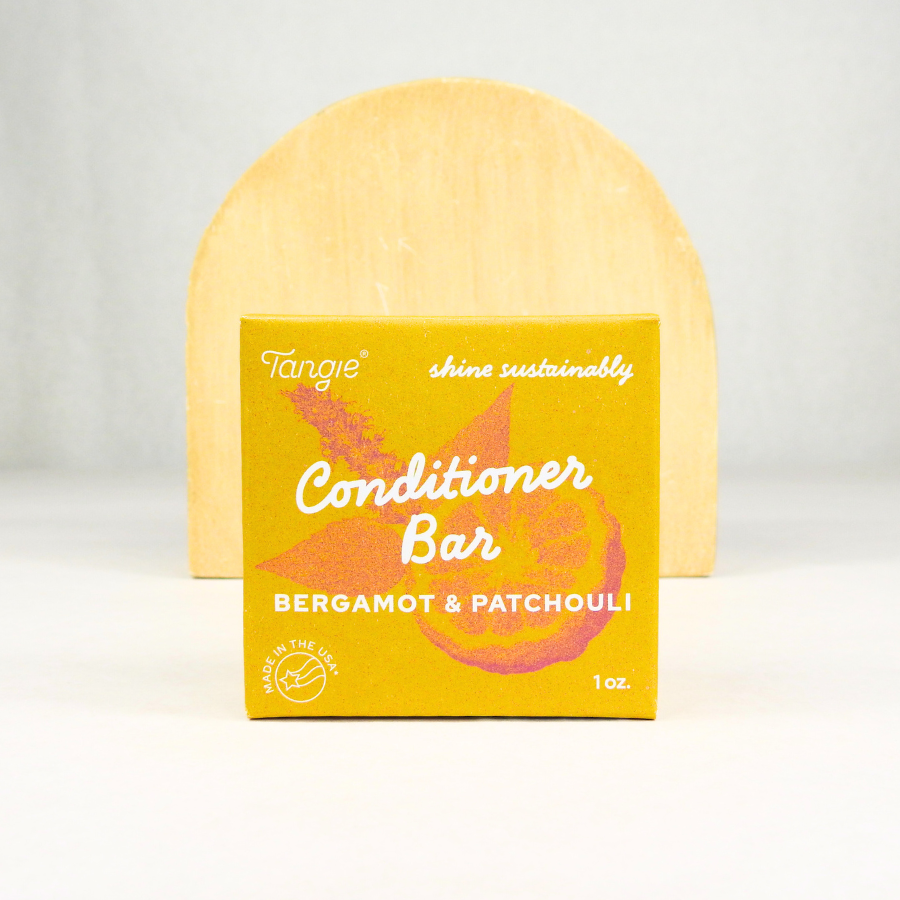
Every Tangie conditioner bar lists the same emulsifier blend: cetearyl alcohol and behentrimonium methosulfate. That pairing matches the BTMS-25 format.
We chose BTMS over BTAC for practical reasons:
- The blend builds the bar. BTMS-25 already contains the fatty alcohol that gives a bar its body. High-active BTAC needs fatty alcohol added separately.
- No solvent to manage. Some BTAC grades carry isopropyl alcohol. BTMS-25 doesn’t.
- Plant-derived. Both parts of the blend start as plant oils, which fits our vegan, Leaping Bunny certified line.
The rest of the bar matters too. Cetearyl alcohol isn’t a drying alcohol, which we explain in Is Cetearyl Alcohol Bad for Hair? Fatty Alcohols Explained. Cocoa butter adds softness, covered in Cocoa Butter in Conditioner Bars: What It Does for Hair.
For every line on the label, see What’s Actually in a Conditioner Bar? Ingredient by Ingredient.
How to spot each one on a label
Look for the full INCI name. Abbreviations like BTMS and BTAC don’t appear on ingredient lists.
- Find “Behentrimonium.” Then check the next word.
- “Methosulfate” means BTMS. “Chloride” means BTAC.
- Check the order. Ingredients are listed from most to least. A conditioner ingredient in the top five is doing real work.
- Look for “Isopropyl Alcohol.” If it sits near BTAC, it likely came in with the raw material.
- Watch for both. Some formulas use BTMS and BTAC together.
Quick answers
Short answers to the questions people ask most.
What is BTMS? Behentrimonium methosulfate, a plant-derived cationic conditioner and emulsifier, usually sold as a blend with fatty alcohol.
Is behentrimonium chloride bad for hair? No. It’s a strong conditioner. Europe caps it at 5% in rinse-off hair products.
Is BTMS gentler than behentrimonium chloride? EWG scores BTMS lower, and BTMS has no EU limit of its own. Both are safe at normal use.
What’s the difference between BTMS-50 and BTMS-25? BTMS-50 has about twice the active BTMS and contains butylene glycol. BTMS-25 is a quarter BTMS and the rest is cetearyl alcohol.
Is BTMS-25 natural? It’s plant-derived. Both ingredients come from plant oils but are chemically processed.
Sources
Regulatory limits come from EU law. Ingredient details come from supplier data. Tangie details come from our own product pages.

 Is Behentrimonium Methosulfate a Sulfate? What BTMS Does in Our Conditioner Bars