
US States That Restrict Single-Use Plastic (2026 Update)

It’s concerning to note that there is currently no federal ban on single-use plastics in the United States.
The current lack of regulation around plastic waste is alarming and raises crucial concerns about our environment and public health. Many of us are deeply worried about the devastating effects of plastic pollution on our oceans, wildlife, and communities. It’s frustrating to think that we could be doing so much more to safeguard our planet for future generations. This issue demands our collective action and awareness as we fight for a more sustainable future.
Instead of a unified approach, we’re stuck with a confusing patchwork of regulations. Some states have implemented strict bans on single-use plastics, while others have only partial restrictions on certain items.
To make matters worse, there are states that have outright prohibited cities from enacting plastic bans. It’s maddening how where you live dictates which rules apply to you—this inconsistency complicates the fight against plastic pollution.
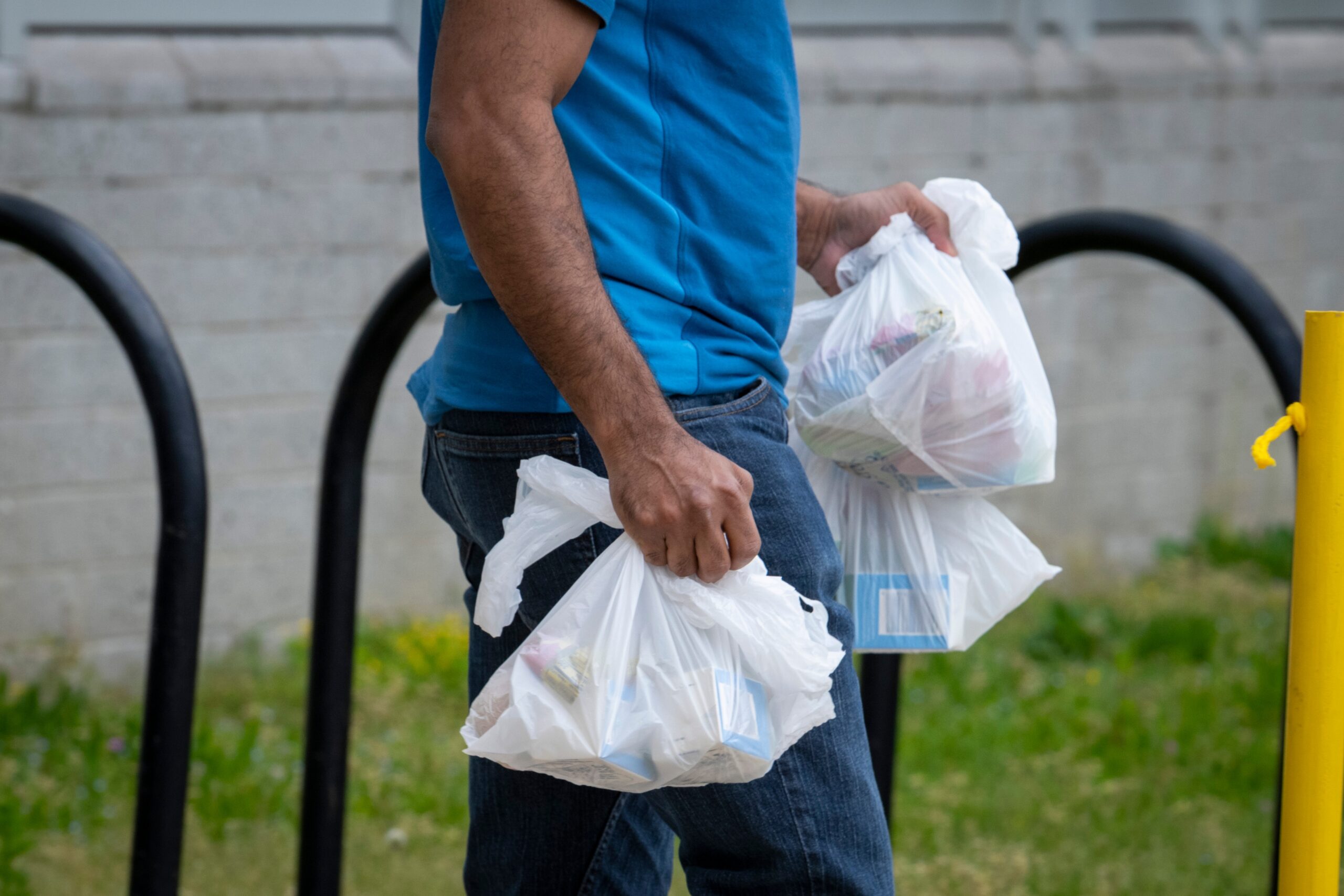
Plastic grocery bags are a significant contributor to this pollution crisis. They’re made from fossil fuels and, worst of all, they don’t ever biodegrade. In response to these pressing environmental issues, many states and cities have taken action by banning single-use plastic bags in stores.
TL’DR: US States That Restrict Single-Use Plastic In 2026
| No federal ban exists. The US has no nationwide single-use plastic law, so rules are a state-by-state (and sometimes city-by-city) patchwork — where you live decides what’s restricted. |
| 12 states have full statewide plastic bag bans: California, Colorado, Connecticut, Delaware, Hawaii, Maine, New Jersey, New York, Oregon, Rhode Island, Vermont, and Washington. California’s 2026 update (SB 1053) closed the “thick reusable bag” loophole and now allows only paper at checkout. |
| Bans go beyond bags. Many states also restrict plastic straws and stirrers (usually “upon request”), polystyrene foam foodware, plastic cutlery, and mini hotel toiletries — a newer category mostly dated 2026 and later. |
| Some states block bans outright. Preemption laws in states like Florida, Texas, Ohio, Arizona, and Idaho make it illegal for their own cities to pass plastic restrictions. Much of this model legislation traces back to industry-backed groups. |
| What it means for you: in a full-ban state, bring a reusable bag or pay for paper. In a preemption state, the habit is on you. Either way, reusables and plastic-free products are the fix that works regardless of zip code. |
These bans aim to push both businesses and consumers toward more eco-friendly alternatives. It’s time we recognize the urgency and push for more unified, effective solutions to address the plastic waste crisis. We cannot afford to ignore this any longer.
Table of contents
This is the current state of play, plus what’s actually covered and what isn’t.
States With Statewide Single-Use Plastic Bag Bans
If you are looking to celebrate plastic-free July and searching for information about plastic bag bans in your state, there is some good news for you! But, more to come from our country when it comes to reducing plastic waste.
As of January 2026, 12 states have enacted full statewide bans on single-use plastic shopping bags: California, Colorado, Connecticut, Delaware, Hawaii, Maine, New Jersey, New York, Oregon, Rhode Island, Vermont, and Washington.
To mitigate environmental damage to landfills and waterways, many states have introduced plastic bag bans, recycling mandates, and usage fees. Although no federal ban exists, local governments implement varying taxes to encourage the adoption of sustainable alternatives like compostable, paper, or reusable bags.
This list is consistently confirmed across state agency sources, legal trackers, and environmental advocacy groups; there’s no real disagreement on these twelve.
What does vary, state to state, is when each ban took effect, what the paper bag fee is, and what exemptions apply.
California’s update is the most aggressive on this list. The original 2014 law (which took effect in 2016) banned thin plastic bags but allowed thicker “reusable” plastic bags as an alternative.
That loophole backfired; those thicker bags were rarely actually reused and largely couldn’t go in curbside recycling, and a 2023 Environment California report found plastic bag waste had increased more than 80% since the original ban took effect.
Overview of Statewide Plastic Carryout Bag Bans As of Sept 2026
| State | Governing Statute / Bill | Key Effective Dates & Notes |
| California | SB 270 (2014) / SB 1053 (2024) | Phase-in started in 2016. SB 1053 closed the 2.25-mil thick film loophole; effective Jan 1, 2026, all plastic film bags are banned at checkout. |
| Colorado | HB 21-1162 | Enacted July 2021; full statewide plastic bag ban took effect Jan 1, 2024. |
| Connecticut | C.G.S. § 22a-255pp | Enacted 2019; statewide plastic bag ban took effect July 1, 2021. |
| Delaware | 7 Del. C. § 6099A | Revised via HB 212; expanded ban on all single-use plastic carryout bags took effect July 1, 2022. |
| Hawaii | County Level (De Facto) | Honolulu, Maui, Hawaii, and Kauai counties independently banned plastic checkout bags, creating a complete statewide prohibition. |
| Maine | 38 M.R.S. § 1611 | Enacted 2019; implemented July 1, 2021. Requires a minimum 15-cent fee on recycled paper bags. |
| New Jersey | P.L. 2020, c. 117 | Took effect May 4, 2022. Among the nation’s strictest: bans single-use plastic film and paper carryout bags in grocery stores over 2,500 sq ft. |
| New York | ECL § 27-2801 (Bag Waste Reduction Act) | Enacted 2019; implemented Oct 19, 2020. |
| Oregon | HB 2509 | Enacted 2019; implemented Jan 1, 2020. Requires a minimum 5-cent fee for recycled paper or reusable bags. |
| Rhode Island | R.I.G.L. § 21-27.11 (Plastic Waste Reduction Act) | Took effect Jan 1, 2024. Banning single-use plastic carryout bags statewide. |
| Vermont | 10 V.S.A. § 6641 (Act 69) | Enacted 2019; implemented July 1, 2020. Restricts plastic carryout bags, expanded polystyrene, and single-use straws. |
| Washington | RCW 70A.530 | Enacted 2020; implemented Oct 1, 2021. Requires minimum fees for compliant paper and reusable thick plastic bags. |
SB 1053, recently signed by Governor Newsom and taking effect on January 1, 2026, is a significant victory for environmental progress. This legislation effectively eliminates the loophole that allowed for the continued use of non-recyclable bags.
Now, stores are required to offer only paper bags, with an ambitious goal set for these bags to contain at least 50% post-consumer recycled material by 2028. This move not only reduces waste but also promotes sustainable practices, paving the way for a greener future.
Hawaii is the outlier in how its ban came to exist. There’s no single statewide law passed by the legislature; instead, individual counties banned bags one by one until every county in the state had a ban in place, creating a ban that’s statewide in effect but not in legal origin.
New Jersey’s law is stricter than most; it doesn’t just ban plastic bags, it also restricts paper bags at large grocery and retail stores, pushing shoppers toward reusable bags specifically rather than just swapping one disposable material for another.
What’s Actually Covered Beyond Bags – Single Use Items
Plastic bag bans get the most attention, but several states and cities have layered in restrictions on other single-use items, too.
The categories typically covered include checkout bags in both thin and “thicker” variants, straws and stirrers (often only available on request, sometimes banned outright), polystyrene foam foodware like takeout containers and cups, plastic cutlery and utensils, and, in New York and California specifically, mini plastic hotel toiletries.
Some cities have gone further still, restricting plastic cups, condiment packets, and even balloons.
| Single Use Plastic Items | US States With Restrictions | What Type of Restrictions |
|---|---|---|
| Plastic checkout bags | California, Colorado, Connecticut, Delaware, Hawaii, Maine, New Jersey, New York, Oregon, Rhode Island, Vermont, Washington | Full ban |
| Plastic straws | California, Maine, New Jersey, New York, Oregon, Rhode Island, Vermont, Delaware, Washington, Colorado | Mostly “upon request” only; D.C. bans outright |
| Plastic stirrers | Colorado, Oregon, and most states with straw rules | Usually bundled with straw restrictions |
| Polystyrene foam foodware | Colorado, Maine, Delaware, Rhode Island, Oregon, New York (expanded 2026 to include coolers/ice chests) | Full ban on sale/distribution |
| Plastic cutlery/utensils | Colorado, Oregon (by request as of mid-2026), Washington D.C. (by request only) | Mostly “upon request” |
| Mini hotel toiletries | New York, Illinois, Washington, California (all hotels, Jan 2026), Oregon (hotels with 50+ rooms by 2027) | Full ban, phased by hotel size in some states |
| Condiment packets | Washington D.C. | By request only |
| Napkins | Washington D.C. | By request only |
| Balloons (intentional release) | Kentucky | Release ban, not a sale ban |
| Plastic produce bags | California (separate rule from checkout bags) | Full ban, effective Jan 1, 2025 |
The inconsistency here is the real headache for anyone trying to shop or run a business across state lines.
There’s no national standard, so the list of what’s actually banned changes as you cross a state border, and sometimes even a county line. A handful of specific examples make the patchwork easier to picture.
Straws are by far the most commonly restricted single item after bags, but almost no state bans them outright, most use the “upon request” model, which keeps straws available for people with disabilities while cutting down on default, automatic distribution.
Polystyrene foam is the second most common target, largely because it’s bulky, doesn’t break down, and isn’t accepted in most curbside recycling programs. And hotel toiletries are a newer category entirely, most of these laws are dated 2026 or later, suggesting this is where the next wave of restrictions is heading rather than where the movement has already landed.
| Seattle, WA holds the title of first U.S. city to officially ban plastic straws outright, doing so in 2018, years before most states caught up with their own “upon request” rules. |
| Washington, D.C. went further than most: a 2022 law bans restaurants from providing napkins, sauce packets, straws, and plastic utensils at all unless the customer specifically asks. The district also requires a 5-cent charge per bag at any business selling food or alcohol, even without a full bag ban on the books. |
| Manhattan Beach, CA has been layering in restrictions since 2013, starting with polystyrene foodware and expanding over several amendments to cover ice coolers, cup lids, packing peanuts, and even polystyrene meat trays, making it one of the more comprehensive local ordinances in the country. |
| Malibu, CA banned polystyrene foam food containers back in 2005, then expanded the rule in 2017 to cover any product made even partly from polystyrene foam, and added a 2018 ban on plastic straws, stirrers, and cutlery citywide. |
| Charleston, SC passed an ordinance in 2018 requiring compostable or recyclable alternatives in place of plastic bags, cups, straws, and stirrers — notable because South Carolina has no statewide ban of its own. |
| Atlanta, GA took a narrower but still meaningful approach in 2019, barring the city government and its contractors from purchasing or distributing single-use plastic bags, straws, and polystyrene containers. |
| Milwaukee, WI banned plastic straws in 2020 despite a Wisconsin state law that explicitly prohibits municipalities from banning plastic bags and other “auxiliary containers” , a reminder that even preemption laws sometimes leave room for narrower local rules to slip through. |
| A cluster of Massachusetts towns — Andover, Chelmsford, Gloucester, Harwich, Lexington, Melrose, Provincetown, Rockport, Swampscott, and Somerville- passed their own local straw restrictions even though Massachusetts has no comprehensive statewide ban, showing how much of this movement happens town by town rather than top-down. |
And then there’s the balloon rule almost nobody expects: Manhattan Beach, CA specifically regulates balloon-related plastic waste as part of its broader single-use ordinance, while Kentucky’s 2025 legislation pairs plastic bag restrictions with a ban on the intentional release of plastic balloons, an item most people wouldn’t think to file under “single-use plastic” at all.
The Other Side: States That Block Plastic Bans Entirely
This is the part that surprises people. It’s not just that some states haven’t banned plastic, some have actively made it illegal for their own cities to try.
Preemption laws block individual cities from passing their own plastic restrictions, and this approach is currently in place in states like Florida, Texas, and Ohio. Arizona has taken the same approach, explicitly outlawing local plastic bag bans.
So, a city government in Texas or Florida that wants to ban plastic bags locally, the way hundreds of municipalities in other states have done, simply isn’t allowed to, the state has removed that option entirely, regardless of local demand.
Florida’s preemption is among the most absolute
State law prohibits any local government or state agency from enacting rules on the use, sale, prohibition, restriction, or taxation of “auxiliary containers”, a category that covers plastic bags and most other single-use packaging. That prohibition stays in place until the state legislature itself acts, meaning no city, no matter how strong local support is, can move first.
Texas got there through the courts, not the legislature
In 2018, the Texas Supreme Court struck down a plastic bag ordinance passed by the city of Laredo, ruling it conflicted with the state’s Solid Waste Disposal Act.
The state’s Attorney General followed up by sending letters to eleven other Texas cities with existing bag bans, informing them their ordinances were now unenforceable. Austin ended enforcement of its own ban within days of that ruling.
Idaho’s law is unusually direct about it
State statute reserves all regulation of “auxiliary containers”, including reusable bags, disposable bags, cups, and bottles — exclusively to the state legislature, explicitly removing the option from counties and cities entirely.
Arizona has used its preemption law against individual cities directly
The town of Bisbee passed its own plastic bag ban, and the Arizona Attorney General formally found that the ordinance violated state law, effectively shutting it down.
Ohio’s preemption came with a built-in delay rather than a permanent block
Legislation signed by Governor Mike DeWine in 2020 barred Ohio cities from banning plastic bags for at least one year, a temporary freeze rather than the outright, indefinite bans some other states use.
Minnesota took a narrower approach
Its preemption law blocks cities from banning plastic bags outright but still allows them to charge a fee instead — a middle-ground version of preemption that’s less common than the all-or-nothing models used elsewhere.
Much of this legislation shares a common origin: a significant share of the model bills behind state-level preemption traces back to the American Legislative Exchange Council, an organization that provides template legislation to state lawmakers, with additional lobbying support from plastic industry groups like the American Progressive Bag Alliance.
So, a city government in Texas, Florida, or Arizona that wants to ban plastic bags locally, the way hundreds of municipalities in other states have done, simply isn’t allowed to, because the state has removed that option entirely, regardless of local demand, public petitions, or city council votes.
Counting beyond just bag-specific bans, including states and territories with partial restrictions, foam bans, or county-level rules, the more commonly cited figure is 19 states and territories with at least one type of single-use plastic restriction in place, including Puerto Rico.
Puerto Rico in particular banned almost all single-use plastic items outright in mid-2025, making it one of the most comprehensive bans on the list, statewide or otherwise.
The gap between “12 states with full bag bans” and “19 states and territories with some restriction” comes down to places that have banned foam containers or straws without going as far as a full bag ban, plus territories operating under their own separate rules.
Why This Matters Beyond Grocery Bags
The scale of the problem these bans are responding to is significant; the average American uses approximately 365 single-use plastic bags per year, which, across a population of 330 million, adds up quickly.
Out of all the plastic ever produced, a staggering 91% has not been recycled. Instead, it finds its way into landfills, contaminates our waterways, or breaks down into microplastics. These tiny particles are now showing up in human blood, tap water, and even the table salt we use. It’s alarming to think about how much plastic is polluting our environment and affecting our health.
That last part is what’s pushed the conversation past “bags are litter” into something closer to a public health question, which is part of why momentum hasn’t slowed, preemption laws notwithstanding.
Bioplastics in the USA: New Trend or Just Another Plastic Waste?
Bioplastics are having a moment in the USA. Corn and sugarcane-based packaging, PLA cups, “compostable” cutlery – they’re marketed as the eco-friendly upgrade, and demand keeps climbing. But is it progress or greenwashing? The catch is disposal.
Most bioplastics only break down in industrial composting facilities, which few US cities operate. Toss a “compostable” cup in a landfill, and it can persist for centuries, right alongside regular plastic. Growing the crops also competes with food and farmland. Bioplastics can help where reuse isn’t possible, but without the right infrastructure, they risk becoming just another form of plastic waste.
Bioplastics can help where reuse isn’t possible — but without the right infrastructure, they risk becoming just another form of plastic waste.
Consumers need to know more about bioplastics and biodegradable plastics; more awareness means better choices as a consumer!
Why Plastic Bag Bans Matter for Consumers
If you live in one of the twelve full-ban states, the choice is mostly made for you at checkout: bring a bag or pay for paper. If you’re in a preemption state like Texas, Florida, or Arizona, the responsibility shifts entirely onto individual habits, since there’s no local policy backing it up.
Plastic is a huge problem in the USA. Implementing bans and regulations on plastic bags, as well as other single-use items like straws and containers, serves as a crucial measure for environmental conservation.
To truly move towards a more sustainable future, companies need to embrace practices that go beyond just following the rules. This means being open and honest about their environmental practices, like how much energy they use and how they manage waste. It’s about making conscious choices that reflect a commitment to protecting our environment.
Imagine businesses harnessing renewable energy, cutting waste, and embracing recycling. This not only protects our planet but sparks a movement for change! By prioritizing the Earth, companies reduce climate risks and cultivate trust with customers and communities. Together, we can inspire a sustainable future!
Either way, the practical fix is the same one Plastic Free July points to every year: a few reusable bags kept somewhere you’ll actually remember them, bulk shopping with your own containers where it’s available, and products, from groceries to home care, that don’t rely on single-use plastic packaging in the first place.
Legislation changes by zip code. The habit doesn’t have to!


